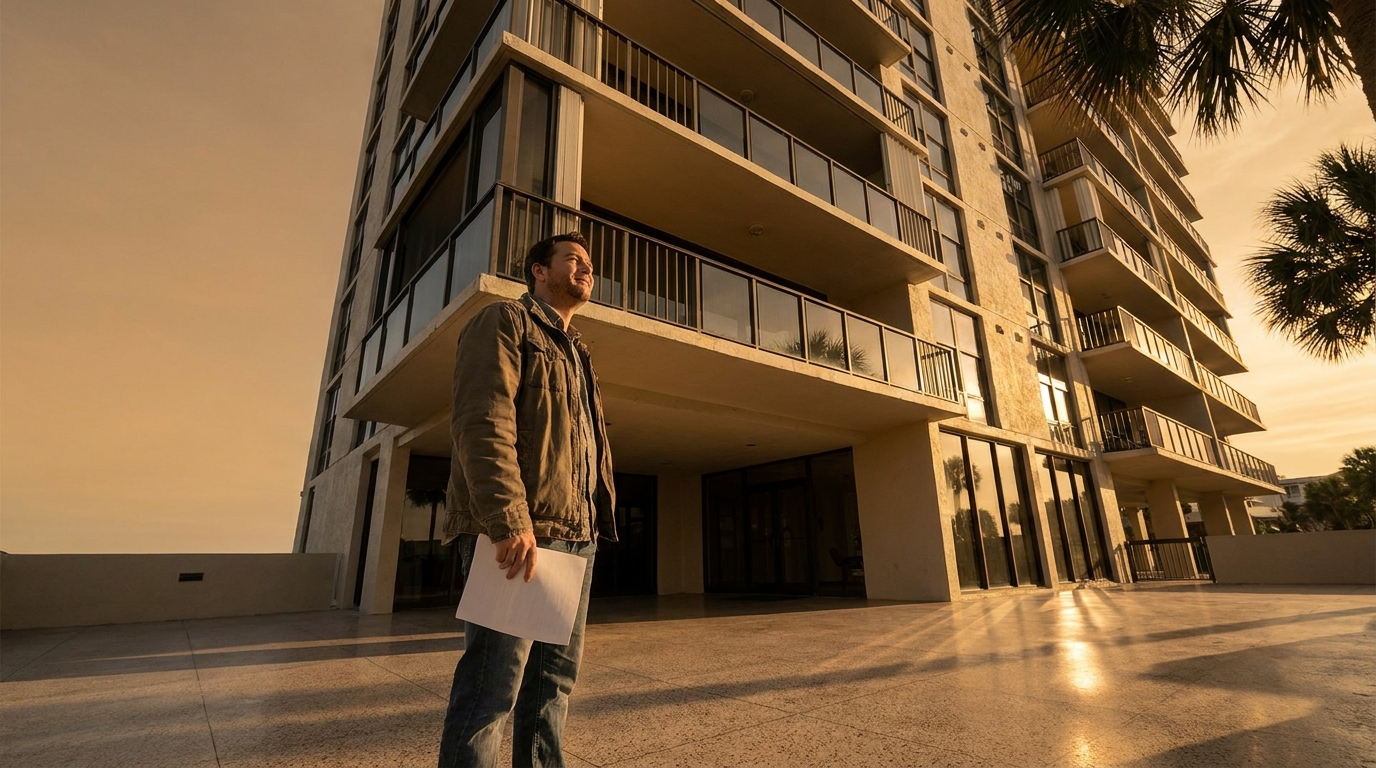
Getting a condo loan approved in Tampa means clearing two underwriting hurdles, not one: you have to qualify personally, and the building itself has to pass lender review. The building side is where most Tampa condo deals stall right now — HOA reserves, insurance, owner-occupancy ratios, and pending special assessments can disqualify a project even when the borrower is pristine. The fix is to vet the condo project before you write an offer, not after.
What does condo mortgage approval actually involve in Tampa?
Condo approval in Tampa is a two-track process. Your lender underwrites you — credit, income, assets, debt — and separately reviews the condo association's budget, reserves, insurance, litigation history, owner-occupancy mix, and structural condition. If the project fails any of those checks, the loan dies regardless of how strong your file looks. That project review is the step most Tampa buyers underestimate.
Bay to Bay Lending operates as a mortgage broker that shops a wide network of lenders on behalf of borrowers, which matters a lot in condo financing because different investors treat the same building differently. One lender's hard no can be another lender's conditional yes, and a broker can route the file accordingly.
What changed for Tampa condo loans in late 2026 and January 2027?
Fannie Mae and Freddie Mac eliminated "limited reviews" for condo financing, and starting in January 2027 they will require condo associations to allocate at least 15% of their assessment income toward reserves, up from 10%. Together, the two agencies dominate the conventional mortgage market, so these rules reshape what's financeable.
For Tampa buyers, the practical effect is that many older condo projects that squeaked through under the old limited-review path now need a full project review. Buildings that underfund reserves — common in older coastal associations — can fall off the warrantable list overnight. Bay to Bay Lending's in-house processing helps keep underwriting and appraisal moving while these project questions get answered in parallel.
Warrantable vs non-warrantable condo loans in Tampa: what's the difference?
A warrantable condo meets Fannie Mae or Freddie Mac project standards, which opens access to conventional financing at standard terms. A non-warrantable condo fails one or more of those tests — too many rentals, too much commercial space, pending litigation, inadequate reserves, single-entity ownership concentration — and requires a portfolio loan from a lender that keeps the mortgage on its own books instead of selling it to the agencies.
Portfolio loans exist and can close, but the pool of lenders shrinks and underwriting is stricter on the borrower side to offset the project risk. This is where broker access really matters. A mortgage broker that shops a wide network of lenders can locate portfolio programs that direct retail lenders simply don't offer.
| Project factor | Warrantable condo | Non-warrantable condo |
|---|---|---|
| Reserve funding | Meets agency minimums (15% from Jan 2027) | Below threshold or waived |
| Owner-occupancy | Meets agency ratios | Investor-heavy or short-term rental dominant |
| Litigation | None material | Active structural or construction-defect suits |
| Lender pool | Broad — conventional, FHA, VA where approved | Narrower — portfolio lenders only |
| Typical terms | Standard agency pricing | Priced for added project risk |
How do HOA restrictions and reserve rules affect Tampa condo financing?
HOA rules affect financing in three concrete ways: rental caps and short-term leasing policies change the project's investor-concentration profile, special assessments change the building's financial stability, and reserve funding levels determine whether the project clears agency guidelines.
Florida Statutes Chapter 718 governs condominium associations and requires structural inspections and reserve funding for buildings covered by the post-Surfside law. Ask for the association's most recent reserve study, budget, and any pending special-assessment vote before you commit.
What about FHA condo approval in Tampa, FL?
FHA financing on a condo requires the entire project to appear on HUD's FHA-approved condominium list, or to qualify through FHA's single-unit approval process for a specific unit in an otherwise unapproved building. Without one of those paths, FHA is off the table — the borrower's credit profile cannot substitute for project approval. VA loans follow a parallel, VA-specific approved-project process.
In Tampa, relatively few condo projects carry current FHA approval, which pushes many first-time buyers toward conventional loans with higher down payments or toward portfolio options. Bay to Bay Lending offers home purchase loans for first-time buyers, move-up buyers, and others, and can tell you quickly whether a target building has an active approval on file before you waste time on inspections.
How does the Tampa condo market in 2026 affect your loan strategy?
Tampa's condo market is a buyer's market with underwriting complications. The Tampa metro had nearly 4,400 condo listings in July 2026 — about 60% above pre-pandemic levels — and the median condo/co-op sale price sat around $206,750. Statewide, Florida Realtors reported a $293,500 median condo/townhouse sale price in September 2026 with 7.7 months of supply versus 4.4 months for single-family homes.
Softness is national and local. For buyers, that means leverage — but it also means underwriters are scrutinizing project financials harder than they did two years ago.
How should you vet a Tampa condo before applying for a loan?
A mortgage broker can review these in parallel with your loan application and tell you quickly whether the project is likely warrantable, non-warrantable, or a hard no.
From Bay to Bay Lending's home purchase loans team: The big one is new credit: financing furniture, buying a car, or opening a store card for the discount. Others are changing jobs, moving money between accounts without a paper trail, or depositing cash we can’t source. Being slow to send requested documents delays things too, and so does waiting until the last minute to get a homeowners insurance quote, which is a real problem in Florida. My rule: don’t change anything financial until you have the keys. Call me first.
That advice applies doubly on condos, because insurance in particular — windstorm, flood, and the master HO-6 — is slower and more expensive to bind on Tampa Bay waterfront buildings, and lenders won't fund without it.
Bay to Bay Lending has been amazing to work with during the loan side of my home-buying process. Joel has been the best loan officer — professional, helpful, and always making sure I’m updated at every stage of the loan process. He made everything feel smooth and easy to understand, and I truly appreciate his communication and support throughout the entire process. I highly recommend Bay to Bay Lending and Joel to anyone buying a home.
Frequently asked questions
Can I get a conventional loan on a non-warrantable condo in Tampa?
Not through standard Fannie Mae or Freddie Mac programs. A non-warrantable condo requires a portfolio loan — a mortgage the lender holds on its own balance sheet rather than selling to the agencies. These programs exist but come from a narrower lender pool, which is where a mortgage broker shopping a wide network of lenders has a real advantage over a single-source retail lender.
What makes a Tampa condo non-warrantable?
Common triggers include reserve funding below agency thresholds, too high a share of investor-owned or short-term rental units, active litigation involving the association, a single owner controlling too many units, significant commercial space in the building, inadequate master insurance, or deferred structural issues flagged under Florida's post-Surfside inspection requirements. Any one of these can push a project off the warrantable list.
How does the January 2027 reserve rule change affect my purchase?
Starting in January 2027, Fannie Mae and Freddie Mac will require condo associations to allocate at least 15% of their assessment income toward reserves, up from 10%. Buildings currently budgeted at the old 10% minimum may become non-warrantable unless their boards raise dues or pass a special assessment to fund reserves. Ask the HOA directly how it plans to comply.
Do I need FHA approval to buy an FHA-financed condo in Tampa?
Yes. The entire condo project must appear on HUD's FHA-approved list, or the specific unit must qualify under FHA's single-unit approval process in an otherwise unapproved building. FHA will not loan against a condo unit in a project that has no approval path open. Relatively few Tampa projects carry current FHA approval, so verify status before relying on an FHA strategy.
How long does condo project review add to closing?
Project review typically runs in parallel with your personal underwriting, so it does not always extend the timeline — but it can, if the HOA is slow to return the questionnaire or if reserve and insurance documents surface issues. Requesting the HOA package the day you go under contract is the single biggest timeline saver. Bay to Bay Lending uses in-house processing to keep underwriting and appraisal moving efficiently alongside project review.
Who regulates mortgage brokers handling condo loans in Florida?
Bay to Bay Lending holds NMLS number 4102. Condominium associations themselves are governed by Florida Statutes Chapter 718, administered by the Department of Business and Professional Regulation.
Working with a local broker on your Tampa condo loan
Condo financing in Tampa rewards buyers who treat the building as part of the loan file from day one. Vet the HOA, request the project documents early, and work with a lender who can move the file to a portfolio program if the agencies won't take it. Bay to Bay Lending has more than 20 years in the mortgage lending business and has received a Best of the Bay award for South Tampa. Readers in Tampa, FL who want help sorting out whether a specific building will finance can reach Bay to Bay Lending at (813) 251-2700 or https://baytobaylending.com to get started.