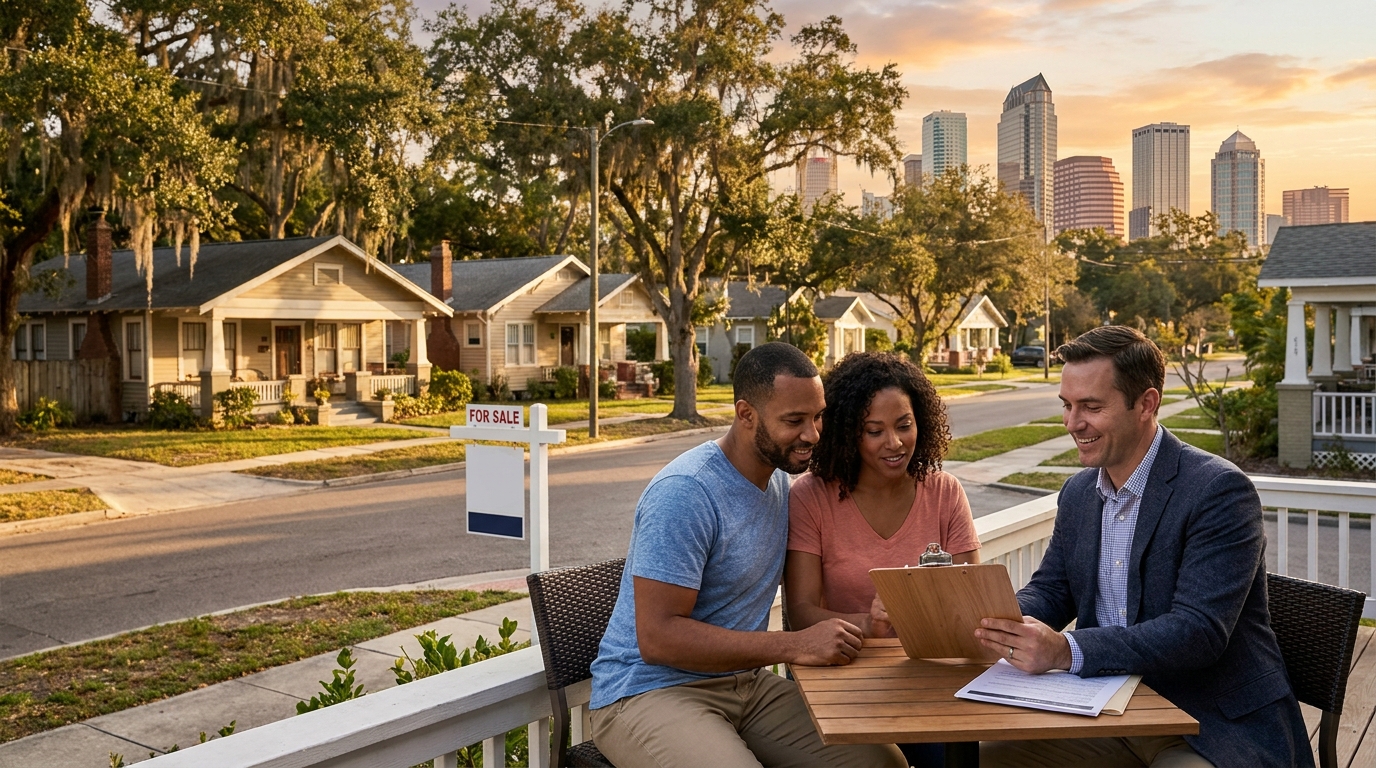
You've probably heard the advice: go straight to your bank for a mortgage because you already have a relationship there. It sounds reasonable. But in Florida's current housing market, that instinct often costs buyers thousands of dollars over the life of a loan.
The reality is that Florida homebuyers who shop through a mortgage broker frequently walk away with lower rates, lower fees, and loan products their bank never would have offered them in the first place. Here's why that gap exists, and what it means if you're buying a home anywhere from South Tampa to Wesley Chapel.
Why Use a Mortgage Broker Instead of a Bank in Florida
A bank can only sell you what's on its own shelf. If you walk into a retail branch, you're getting that bank's rate sheet, that bank's underwriting guidelines, and that bank's fee structure — take it or leave it.
A mortgage broker works differently. Brokers are licensed intermediaries who shop your file across dozens of wholesale lenders, each competing for your loan. That competition is where the savings come from.
Wholesale rates — the rates lenders offer through their broker channel — are almost always priced below the retail rates those same lenders offer directly to consumers. It's the same lender, sometimes even the same underwriter, just accessed through a different door.
The Cost Advantage: Broker vs Direct Lender in Florida
Florida is one of the more competitive mortgage markets in the country, and that competition benefits buyers who shop around. Here's where the cost differences typically show up.
Interest Rate Pricing
When a broker submits your loan file to multiple wholesale lenders, you see the actual best rate available for your credit profile that day. When you go direct to a bank, you see one rate — theirs. Even a quarter-point difference on a $400,000 Tampa mortgage adds up to roughly $20,000 over 30 years.
Lender Fees
Banks tend to have fixed origination fees, processing fees, and underwriting fees baked into their retail model. Brokers can often shop those fees down or waive them entirely depending on the lender they place you with.
Loan Program Access
This one matters a lot in Florida. Between condo financing rules, self-employed borrowers, snowbirds buying second homes, and buyers dealing with older housing stock in neighborhoods like Seminole Heights or Hyde Park, the loan program you need may not exist at your local bank. Brokers have access to non-QM loans, bank statement loans, jumbo products, DSCR loans for investors, and specialty programs that most retail banks simply don't offer.
Florida-Specific Reasons the Broker Model Wins
Some of the advantages of a mortgage broker over a bank are universal. Others are specific to what Florida buyers deal with.
Condo Financing in the Tampa Bay Market
After the 2026 Surfside collapse, Fannie Mae and Freddie Mac tightened condo project review requirements significantly. Many Florida condo buildings — including plenty in downtown Tampa, Channelside, and along the Gulf Coast — landed on lender-specific "ineligible" or "unavailable" lists. One bank might decline your condo purchase entirely while another wholesale lender approves it without issue. A broker knows which lenders currently approve which buildings. A single bank can't help you with that.
Hurricane Season and Insurance Escrows
Florida's property insurance market is a real challenge, and lenders vary widely in how they handle escrow requirements, wind coverage documentation, and closings that fall during hurricane season. If you're trying to close in August or September, a broker can steer your file to a lender that handles Florida's insurance realities smoothly rather than getting stuck at a bank whose underwriters flag every wind mitigation form.
Self-Employed and 1099 Buyers
Tampa has a large population of self-employed professionals, real estate investors, and service business owners. Traditional banks often struggle with tax-return-heavy files. Brokers can place these buyers with lenders that specialize in bank statement loans or profit-and-loss underwriting.
How Mortgage Brokers Save Money for Tampa Buyers
The savings from using a broker in Florida typically come from three places at once:
- Lower interest rate — often 0.125% to 0.5% below equivalent retail bank pricing
- Lower or negotiated closing costs — because brokers can shop lender credits against rate
- Better loan structure — putting you in a product that fits your actual situation, not just what's available on one shelf
On a typical Tampa home purchase in the $350,000 to $500,000 range, those combined savings often run into five figures over the life of the loan.
What About the Relationship Argument?
The most common reason buyers give for going direct is that they trust their bank. That's fair. But a mortgage isn't a checking account — it's a 30-year financial commitment where the numbers matter more than the branding.
Working with an experienced local broker like Bay to Bay Lending gives you the relationship piece without giving up the pricing advantage. You get someone who answers the phone, walks you through the paperwork, and explains what's happening at every stage — while still shopping your file across dozens of lenders to find the best fit.
Bay to Bay Lending's 4.6★ rating across Google reviews reflects that combination. As one recent client put it, the team "made complicated topics easy to understand," which matters especially for first-time buyers navigating Florida's specific quirks.
Frequently Asked Questions
Do mortgage brokers charge more than banks?
No — in most cases, brokers cost less overall. Broker compensation is disclosed on your loan estimate and is typically paid by the lender, not added on top of your costs. The wholesale pricing brokers access usually more than offsets any broker fee.
Are mortgage brokers regulated in Florida?
Yes. Florida mortgage brokers are licensed by the Florida Office of Financial Regulation and must also hold NMLS (Nationwide Multistate Licensing System) credentials. They're held to disclosure, fiduciary, and consumer protection standards that apply specifically to loan originators.
Will using a broker slow down my closing?
Generally, no. Experienced Florida brokers often close faster than retail banks because they can move a file to a different lender if the first one has processing delays — something a direct bank obviously can't do.
Can a broker help with condo purchases in Tampa?
Yes, and this is one of the strongest arguments for using a broker in the Tampa market. Broker access to multiple wholesale lenders means a much higher likelihood of finding an approved lender for your specific condo project.
The Bottom Line for Florida Homebuyers
Going direct to a bank feels safe, but it's often the more expensive path. The broker model exists precisely because wholesale lending is cheaper than retail lending, and Florida's competitive market rewards buyers who take advantage of that structure.
If you're buying in Tampa or anywhere across the Bay area and want to see what your actual options look like across multiple lenders, Bay to Bay Lending offers free rate comparisons and loan reviews at baytobaylending.com. It's a straightforward way to see whether the broker path saves you money on your specific situation before you commit to anything.
"