If you're a Tampa homeowner trying to choose between a HELOC and a home equity loan, the short answer is this: pick a HELOC when you need to borrow in stages and can live with a variable rate, and pick a fixed-rate home equity loan when you know the exact amount and want a predictable payment. Both are secured by your home, so the structure matters as much as the rate.
That's the lens we use at Bay to Bay Lending, and it's the lens this guide walks you through — not a sales pitch, just the mechanics of how each product works and how to match one to your situation.
What's the core difference between a HELOC and a home equity loan?
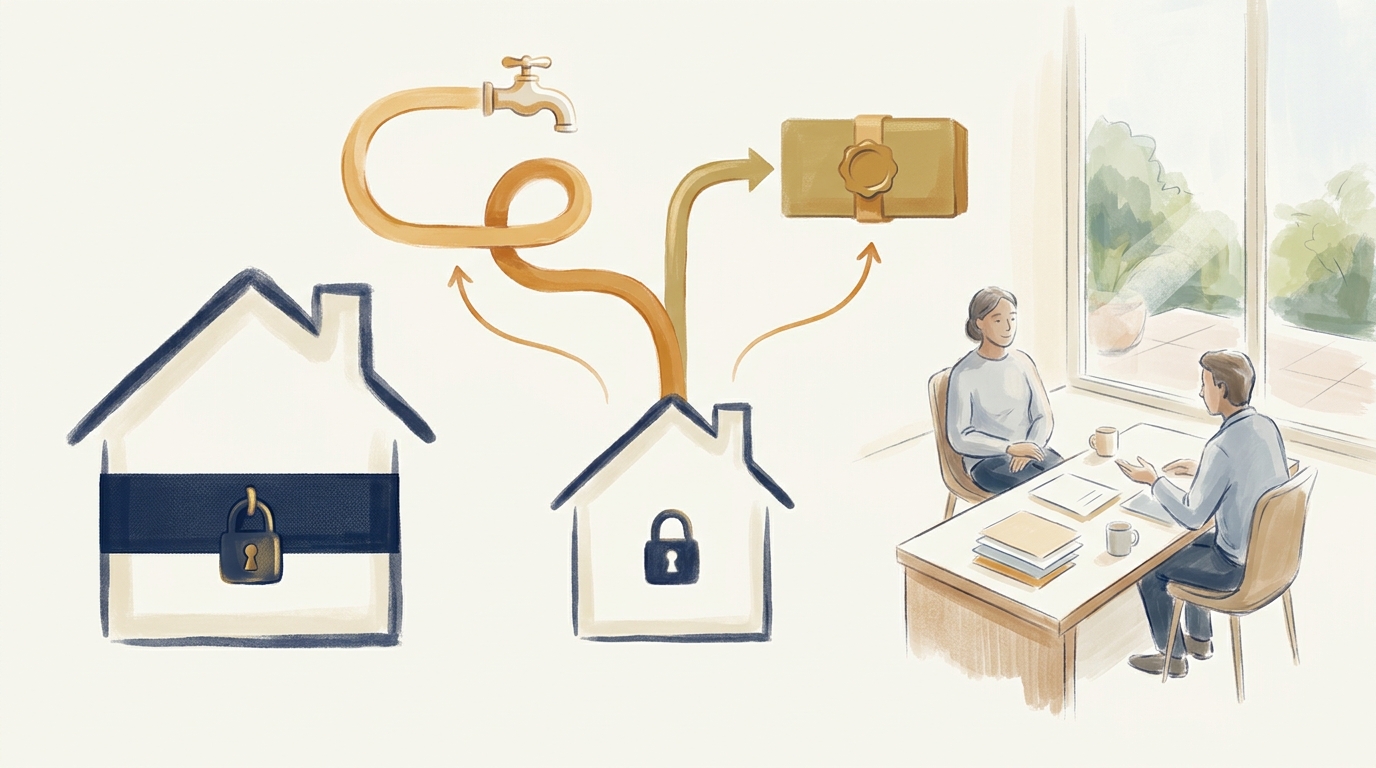
A HELOC is a revolving line of credit secured by your home — you draw, repay, and draw again up to a limit, usually at a variable rate. A home equity loan is a one-time lump sum at a fixed rate with set monthly principal-and-interest payments. The structural difference drives everything else: flexibility versus predictability.
Both products sit behind your first mortgage as a second lien in most cases. That means if your payments slip badly enough, the home itself is on the line. The question isn't which product is "better" — it's which one fits the money you actually need and the payment you can actually absorb.
How does a HELOC actually work under the hood?
Rates are variable and tied to an index such as the Wall Street Journal Prime Rate, so your payment can rise or fall as the market moves.
Qualifying depends on your equity position, credit, income, and property type; lender CLTV limits vary, with examples ranging from 80% LTV for single-family residences to 90% CLTV at some lenders. During the draw period, many HELOCs allow interest-only payments on what you've actually used — which keeps the near-term payment low but can create a jump when the repayment period begins and principal kicks in.
The variable-rate piece is where readers get surprised. A broker's job is to stress-test that payment at today's rate and at higher rates before you sign.
How does a home equity loan work differently?
A home equity loan hands you the full amount at closing and locks a fixed interest rate for the life of the loan, with terms that can extend up to 30 years. Your payment is the same month one and month 240 — no index, no adjustment, no surprise. Home equity loan rates are set at closing and follow a different driver than a HELOC's variable rate.
The tradeoff is simple: you pay interest on the whole balance from day one, whether you spend it in week one or over three years. If your project cost comes in lower than expected, you've still borrowed and are paying on the full amount.
Side-by-side: which structure wins which scenario?
Picking between the two is really about matching the loan to the money you need. Known cost and fixed timeline point one way; staged costs and uncertainty point the other. The table below is the framework we walk Tampa clients through.
| Scenario | Better fit | Why |
|---|---|---|
| Kitchen or whole-home remodel in phases | HELOC | Draw as contractor bills come in; interest only on what's used |
| Fixed contractor quote for a defined project | Home equity loan | Lump sum matches the invoice; payment is predictable |
| Consolidating a specific credit card balance | Home equity loan | Known number, fixed payoff schedule |
| Hurricane-season repairs with unknown scope | HELOC | Flexibility to draw as damage and estimates evolve |
| Tuition paid semester by semester | HELOC | Only draw what's billed each term |
| Budget sensitive to rate changes | Home equity loan | Fixed rate removes variable-payment risk |
From Bay to Bay Lending's heloc team: It works well for projects done in phases or with uncertain costs, like a kitchen remodel where bids change, because you only draw and pay interest on what you use. If you know the exact cost up front, a fixed home equity loan may be simpler. For a major renovation where you don’t have much equity yet, a renovation loan that lends against the home’s value after the improvements may work better. For small projects, a HELOC’s closing costs may not be worth it.
What does the Tampa market mean for your decision?
Tampa's housing stock mixes bungalows in Seminole Heights, newer builds in Westchase and New Tampa, and historic homes in Hyde Park and South Tampa — and that mix matters because condo CLTV limits often differ from single-family limits at the same lender. Equity levels have risen enough across most Hillsborough neighborhoods that borrowers who bought even a few years ago may now have the 15% to 20% equity cushion a HELOC typically requires.
Hurricane season is the other local wrinkle. If your reason for borrowing is wind or water repair with an unknown final cost, a HELOC's draw-as-you-go structure usually fits better than committing to a lump sum before adjusters and contractors have finished scoping the job. Nationally, lenders are competing for home-equity borrowers, meaning Tampa borrowers have real negotiating room on terms.
Why does working with a mortgage broker change the math?
A single bank can only sell you what's on its own rate sheet. A broker shops multiple lenders against your specific equity position, credit profile, and the way you actually plan to use the money — then compares a HELOC quote and a home equity loan quote side by side with the same assumptions. That's the comparison most borrowers never get when they walk into one branch.
Bay to Bay Lending has more than 20 years in the mortgage lending business, with a team carrying a combined lending experience of more than 32 years, and holds NMLS number 4102. We're also one of the fastest growing lenders in the state of Florida and have received a Best of the Bay award for South Tampa. Beyond equity products, we handle home purchase loans for first-time buyers, move-up buyers, and others, along with FHA loans insured by the Federal Housing Administration for owner-occupied primary residences — so the broader financing picture informs the equity recommendation.
Jerry was beyond helpful, kind, and honest! Truly the best mortgage broker out there! Very willing to answer any and all questions me and my fiancée had for our first home buying process! Will definitely be recommending to other family and friends!
What should Tampa borrowers check before signing either product?
Before you commit to a HELOC or a home equity loan, confirm the index and margin on any variable rate, the rate floor and ceiling, the draw and repayment periods, every fee (annual, inactivity, early-payoff, appraisal), and the combined loan-to-value limit for your property type. Ask for the payment at today's rate, at a stressed higher rate, and at the start of the repayment period if applicable.
For a home equity loan, compare terms directly — a longer term lowers the monthly payment but increases total interest paid. On the tax side, consult a tax advisor before using equity to clear unsecured balances, as the tax treatment of home equity loan interest can depend on how the funds are used.
Frequently asked questions
Is a HELOC or a home equity loan better for a Tampa home renovation?
A HELOC usually fits renovations better when the scope or cost is uncertain, because you only draw and pay interest on what you've actually used. A fixed home equity loan is the stronger pick when you have a signed contractor quote and want the certainty of one payment that doesn't change. The right answer depends on how fixed your project cost really is.
How much equity do I need in my Tampa home to qualify?
Many Tampa homeowners who purchased a few years ago have reached that threshold through appreciation alone. A broker can run the CLTV math against your current estimated value before you apply.
Why are HELOC rates variable and home equity loan rates fixed?
HELOC rates are variable because they are tied to an index such as the Wall Street Journal Prime Rate, so they move as that benchmark moves. Home equity loan rates are fixed at closing, providing a stable rate for the life of the loan rather than adjusting with a variable index. Different benchmarks drive different behavior for each product.
Can I use a HELOC or home equity loan to consolidate credit card debt?
Yes, but weigh it carefully. You'd be converting unsecured debt into debt secured by your home, which raises the stakes if you fall behind. Also note that converting unsecured debt into debt secured by your home raises the stakes if you fall behind — consult a tax advisor about any potential tax implications before proceeding.
How long do HELOC draw and repayment periods usually last?
During the draw period you can borrow against the line and typically pay interest only on what you've used. Once the repayment period begins, you can no longer draw and must pay down principal and interest on the balance, which usually means a higher monthly payment.
Does Tampa's hurricane season affect which product I should choose?
It can. If you're borrowing to fund storm repairs or hardening work where the final scope and cost aren't yet known, a HELOC's ability to draw in stages matches that uncertainty better than committing to a lump sum. If you already have a firm contractor estimate and a scheduled job, a fixed home equity loan removes rate risk from the equation.
Should I work with my current bank or a mortgage broker?
Your current bank can only offer products on its own rate sheet, while a mortgage broker shops multiple lenders and can compare HELOC and home equity loan quotes side by side using the same assumptions. For a product this consequential — secured by your home for a decade or more — the second opinion usually pays for itself in either better pricing or a better-fitting structure.
Bringing it together
The HELOC-versus-home-equity-loan decision isn't about which product is objectively better — it's about which one matches the way you'll actually spend the money and the payment you can actually carry. Flexibility and variable rates on one side; lump sum and predictability on the other. Get the structure wrong and even a competitive rate can turn into a monthly stressor.
Tampa homeowners who want this handled professionally can reach Bay to Bay Lending at (813) 251-2700 or https://baytobaylending.com to compare both products against your specific equity, credit, and goals before committing.