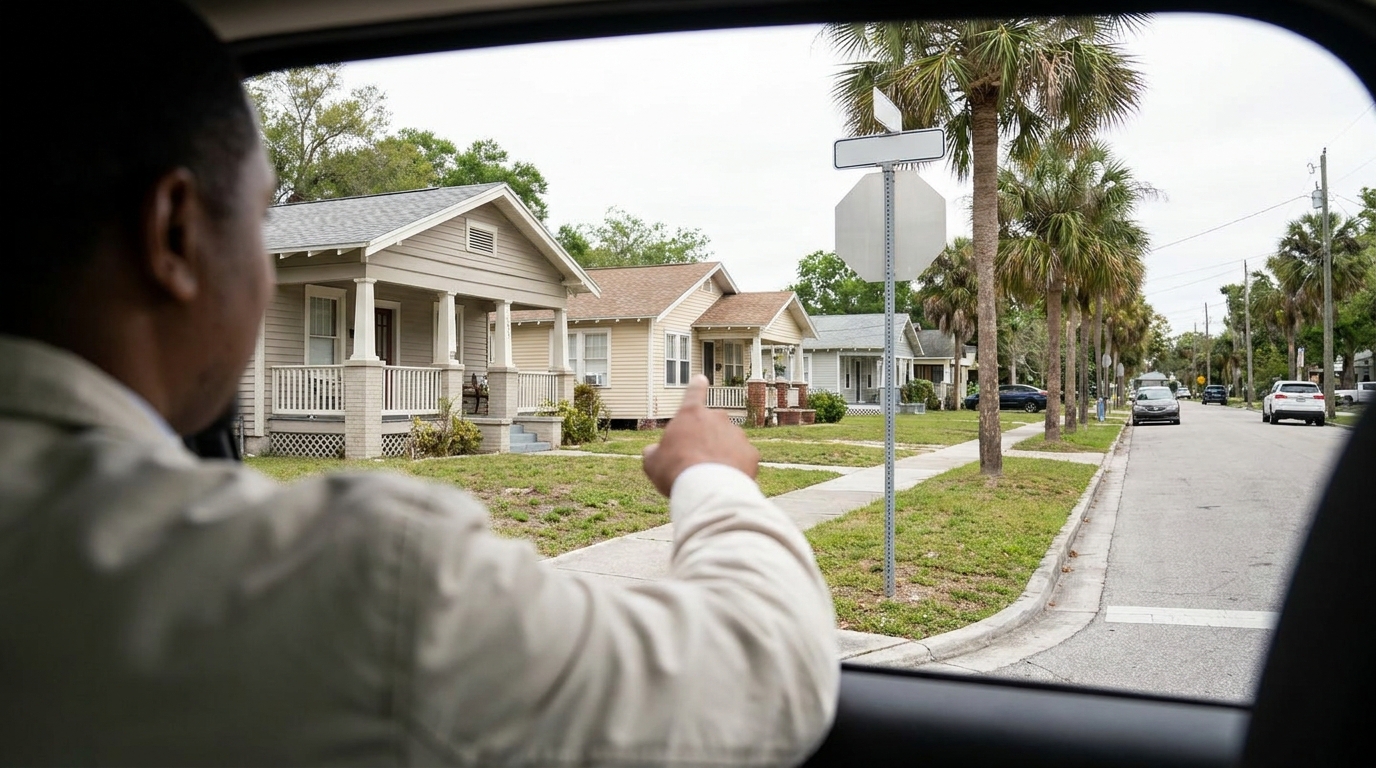
Getting your first mortgage in Tampa typically takes 30 to 45 days from accepted offer to closing, but the full journey — starting with pre-approval — usually spans two to four months. The process moves through six defined stages: pre-approval, house hunting, formal application, underwriting, appraisal and title work, and closing. Each stage has its own paperwork, its own waiting periods, and its own reasons things stall.
This is what actually happens under the hood, in order, with the Tampa-specific wrinkles that catch first-time buyers off guard — flood zones, wind mitigation inspections, and the insurance quote that can rewrite your budget overnight.
What happens before you ever look at a house?
Before touring homes, you need a pre-approval — a lender's written commitment based on verified income, credit, and assets. In Tampa, expect to spend 3 to 7 days gathering documents and getting a pre-approval letter. This step determines your price ceiling, your loan type (FHA, VA, conventional, USDA), and how competitive your offers will look to sellers.
The lender pulls a tri-merge credit report, reviews two years of W-2s or tax returns, two months of bank statements, and recent pay stubs. Self-employed buyers usually need two full years of returns plus a year-to-date profit and loss. At Bay to Bay Lending, we run the numbers multiple ways at this stage — FHA versus conventional, different down payment scenarios — so you understand the monthly payment differences before you fall in love with a listing in Seminole Heights or Riverview.
One thing that trips up Tampa buyers: your pre-approval amount assumes an insurance estimate. Once you're under contract on an actual home — especially anything near the coast, in South Tampa, or in a designated flood zone — real quotes can push your monthly payment hundreds of dollars higher than the estimate. Ask your lender to stress-test the number.
How long does house hunting realistically take?
House hunting in Tampa usually takes 30 to 90 days for first-time buyers, though it varies widely with inventory, price range, and how flexible you are on neighborhood. Once you find a home and the seller accepts your offer, the 30-to-45-day closing clock starts.
Your purchase contract will spell out three key dates: the inspection period (typically 10 to 15 days), the financing contingency deadline, and the closing date. Miss any of them without a written extension and you can lose your earnest money — commonly 1% to 3% of the purchase price in the Tampa market.
During the inspection window, you'll also want a wind mitigation inspection and a four-point inspection if the home is older than about 30 years. Both directly affect your homeowner's insurance premium, which directly affects your loan approval. Florida insurers weigh roof age heavily — a roof over 15 years old can make coverage expensive or hard to place at all.
What actually happens during the formal loan application?
Within 3 business days of an accepted offer, you submit a formal loan application and receive a Loan Estimate — a standardized federal disclosure showing your interest rate, monthly payment, closing costs, and cash-to-close. This document is your baseline; every fee later gets compared against it.
You'll re-upload updated pay stubs and bank statements (lenders want documents dated within 30 days), sign disclosures electronically, and pay for the appraisal — typically $500 to $700 in the Tampa market. Your rate can be locked at this point, usually for 30, 45, or 60 days. A locked rate is protected from market movement; an unlocked one floats until you commit.
This is also when your loan officer orders the title search and coordinates with the closing agent. In Florida, buyers and sellers negotiate who pays for the owner's title insurance policy — in Hillsborough County, custom typically has the seller paying, but it's contract-dependent.
What does underwriting really do?
Underwriting is where a licensed underwriter verifies every claim in your file and decides whether the loan meets guidelines. It usually takes 7 to 14 business days for a first pass, then another few days for each round of conditions. Underwriters check income, employment (often re-verified the day before closing), asset sourcing, credit, the appraisal, title, and insurance.
Expect a "conditional approval" before you get a "clear to close." Conditions are requests for more documentation — a letter explaining a large deposit, an updated homeowner's insurance declaration page, proof a collection was paid. First-time buyers often panic here. Don't. Conditions are normal; they're the underwriter closing loops, not rejecting you.
What actually kills loans at this stage: changing jobs, opening new credit, making large undocumented deposits, or letting your insurance quote come in higher than budgeted. One reviewer described the value of a lender who "kept us informed every step of the way" — that's what this stage requires, because silence during underwriting is what makes buyers spiral.
How do the appraisal, title work, and insurance come together?
These three run in parallel during underwriting and any one of them can delay closing. The appraisal (ordered week one, delivered in 7 to 14 days) confirms the home is worth what you're paying. If it comes in low, you either renegotiate, bring extra cash, or walk. Title work confirms the seller can legally sell and surfaces any liens, easements, or open permits.
Insurance is the Tampa wild card. Florida's property insurance market has tightened significantly, and lenders require a bound policy before closing. For homes in a FEMA-designated flood zone — which includes large parts of South Tampa, Davis Islands, and coastal Pinellas — federally backed mortgages require flood insurance in addition to a standard hazard policy. Get quotes the same week you go under contract, not the week before closing.
What actually happens on closing day?
Closing in Florida typically happens at a title company or attorney's office and takes 45 to 90 minutes. Three business days before closing, you'll receive a Closing Disclosure — the final version of your Loan Estimate. Federal law (TRID) requires this three-day window; it can't be waived except for genuine emergencies.
You'll bring a government-issued ID and a wire confirmation for your cash-to-close (personal checks over a small threshold aren't accepted). You'll sign the note, the mortgage, the deed transfer paperwork, and roughly 40 to 60 additional pages of disclosures. The lender funds the loan, the title company records the deed with Hillsborough County, and you get keys — usually the same day, sometimes the next business morning.
What's the full timeline, stage by stage?
| Stage | Typical Duration | What Can Delay It |
|---|---|---|
| Pre-approval | 3–7 days | Missing tax returns, credit disputes |
| House hunting | 30–90 days | Low inventory, competing offers |
| Application & disclosures | 3–5 days after contract | Slow document upload |
| Appraisal | 7–14 days | Appraiser backlog, low value |
| Underwriting | 7–14 days initial, +3–7 per condition round | Insurance quotes, income verification |
| Clear to close & CD | 3 business days minimum | Last-minute changes to fees |
| Closing day | 1 day | Wire timing, walk-through issues |
Frequently Asked Questions
How much money do I actually need to close on my first home in Tampa?
Plan for 3% to 5% down plus 2% to 4% in closing costs on a conventional loan, or as little as 3.5% down with FHA. On a $350,000 Tampa home, that's roughly $17,500 to $30,000 total cash to close. First-time buyer programs and seller credits can reduce this. Your Loan Estimate spells out the exact number within 3 days of application.
What credit score do I need for a first mortgage in Tampa?
FHA loans allow scores as low as 580 with 3.5% down, or 500 with 10% down. Conventional loans generally require 620 minimum, with the best rates at 740 and above. VA loans have no federal minimum but most lenders set 580 to 620. Tampa lenders will pull a tri-merge report and use the middle of your three scores.
Can I switch lenders after I'm pre-approved?
Yes. Pre-approval is not a contract — you can change lenders anytime before closing, though switching after you're under contract adds 2 to 3 weeks and may require a contract extension. If you're not getting responsive communication or clear answers early on, switch then rather than mid-underwriting.
Why do Tampa homeowner's insurance quotes vary so much?
Florida's insurance market is highly variable because of hurricane exposure, roof age, home construction type, and flood zone designation. Two nearly identical homes in Brandon and Apollo Beach can quote thousands apart based on distance to coast and roof condition. Always get real quotes during your inspection period, not estimates.
What's the difference between pre-qualified and pre-approved?
Pre-qualified is an informal estimate based on unverified information you provide. Pre-approved means the lender pulled credit and reviewed actual income and asset documents, then issued a written commitment for a specific loan amount. Tampa sellers and their agents take pre-approval letters seriously and often disregard pre-qualifications entirely.
Can I close in less than 30 days?
Yes, but it requires everything moving in parallel: fast appraisal, quick insurance binding, no underwriting surprises, and a cooperative title company. 21-day closings happen in Tampa but leave zero margin for error. Most first-time buyers benefit from a 35 to 45 day timeline that absorbs typical hiccups without missing contract deadlines.
Where to go from here
The mortgage process rewards buyers who understand the sequence and start each stage before it's urgent. Get pre-approved before you tour homes. Get insurance quotes the week you go under contract, not the week before closing. Answer document requests within 24 hours. Don't open new credit or change jobs.
Readers in Tampa who want a lender that walks through each stage in plain language — and runs the numbers multiple ways before you commit — can reach Bay to Bay Lending at https://baytobaylending.com. The team's 4.6★ rating across 36 Google reviews reflects consistent feedback around responsiveness and clear communication, which is exactly what a first-time buyer needs when underwriting starts asking questions.