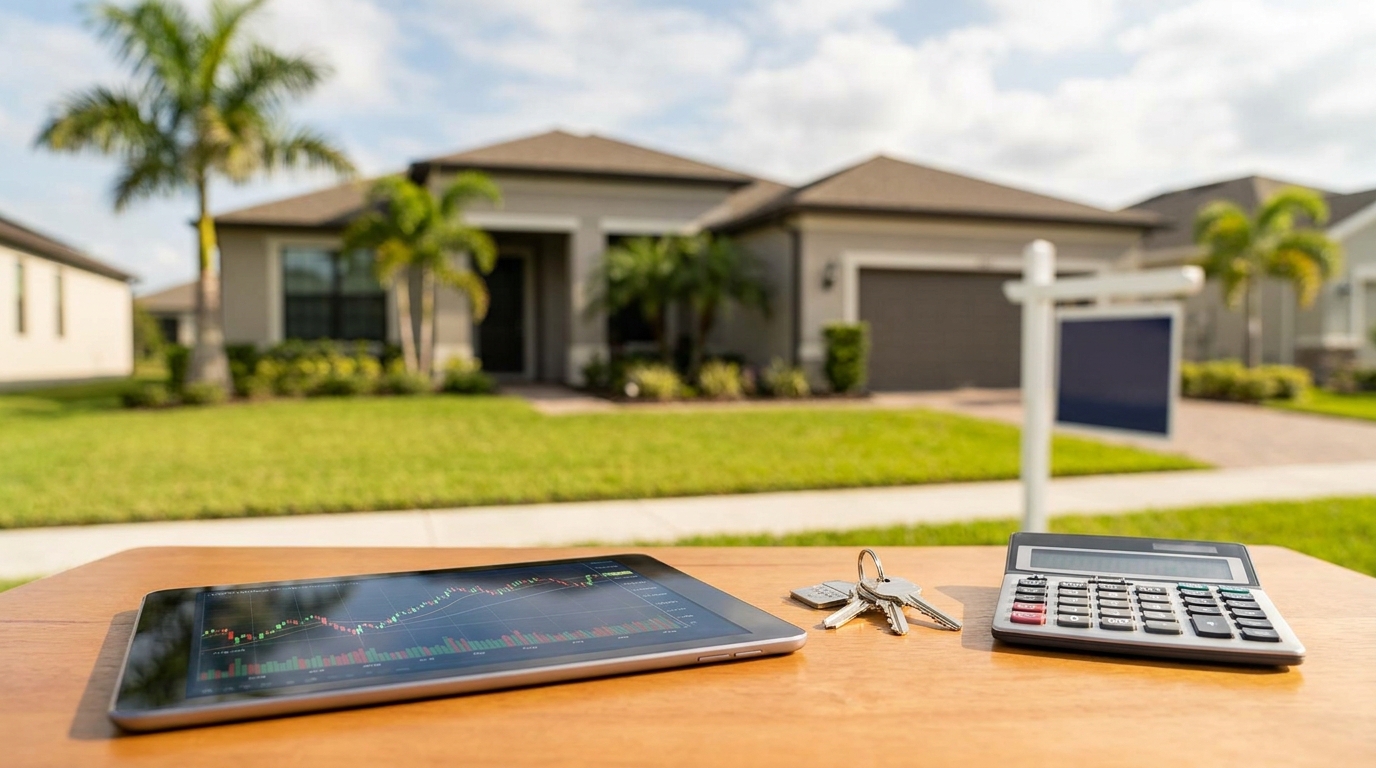
You've watched Brandon's rental market mature from a quiet Tampa suburb into one of Hillsborough County's more active investor zones. Maybe you're eyeing a single-family rental near Bloomingdale, a duplex off Lumsden Road, or a small multi-unit closer to the Brandon Town Center corridor. The question isn't whether the numbers can work — it's how to actually finance the deal when the property won't be your primary residence.
Investment property financing in Brandon follows different rules than a standard owner-occupied mortgage. Rates are higher, down payments are larger, and underwriters care more about the property's cash flow than your personal commute. Here's what you need to know before you make an offer.
How Rental Property Mortgages Differ From Primary Home Loans
When a lender knows you'll live in the home, they price the loan accordingly. Owner-occupants default less often, so rates are lower and down payments can be as small as 3% to 5%. Investment property loans flip that risk profile.
Expect three core differences:
- Higher down payments. Conventional investment loans typically require 20% to 25% down for a single-family rental, and 25% to 30% for a 2–4 unit property.
- Higher interest rates. Investor loans usually price 0.5% to 0.875% above comparable owner-occupied rates.
- Stricter reserve requirements. Lenders often want to see 6 months of PITI (principal, interest, taxes, insurance) in reserves per financed property.
Brandon's market adds its own wrinkle: Florida property insurance. With Hillsborough County sitting in a hurricane-exposed zone, insurance premiums on a rental can run materially higher than the national average, and lenders fold that figure into your debt-to-income ratio. A rental that pencils out at $2,400/month in rent can lose its margin fast if the wind-and-hail policy comes back at $4,000 a year.
The Main Loan Options for Brandon Investors
Conventional Investment Loans (Fannie Mae / Freddie Mac)
This is the workhorse for most first- and second-property investors. You'll need:
- Credit score of 680+ (720+ for the best pricing)
- 20–25% down for single-family, 25%+ for multi-unit
- Debt-to-income ratio under 45%
- Two years of tax returns and W-2s or self-employment documentation
- Reserves equal to 6 months of payments per financed property
You can finance up to 10 properties under conventional guidelines, but pricing tightens after the fourth. Brandon investors building a portfolio often hit this ceiling and pivot to portfolio or DSCR products.
DSCR Loans (Debt Service Coverage Ratio)
DSCR loans are the fastest-growing product in the cash flow property financing space, and for good reason. Instead of qualifying on your personal income, you qualify on the property's rental income versus its mortgage payment.
The math is simple: gross monthly rent ÷ monthly PITI = DSCR. A ratio of 1.0 means the rent covers the payment exactly. Most lenders want 1.0 to 1.25 at minimum, with better pricing at 1.25+.
DSCR loans are ideal if you're self-employed, write off heavily on Schedule E, or already own several financed rentals. No tax returns, no DTI calculation — just the property's numbers and your credit. Down payments typically run 20–25%, with rates a bit higher than conventional.
Portfolio and Bank Statement Loans
For investors who don't fit the conventional box — heavy write-offs, multiple LLCs, recent self-employment — portfolio loans held by the lender can offer flexibility. Bank statement programs use 12 or 24 months of deposits to establish income instead of tax returns.
FHA and VA House Hacking
If you're willing to live in one unit of a 2–4 unit Brandon property for at least 12 months, FHA financing lets you put as little as 3.5% down. VA loans go to 0% for eligible veterans. The rental income from the other units helps you qualify. This is one of the more efficient ways to start a Brandon rental portfolio if you don't already own a home.
What Underwriters Actually Look At
Beyond the headline requirements, here's what trips up Brandon investors most often:
Rental income calculation. For a property you're buying, lenders use 75% of the appraiser's market rent estimate (the other 25% is assumed vacancy and maintenance). That haircut matters when you're stretching to qualify.
Insurance binder timing. In Florida, insurance carriers can be selective about which properties they'll write, especially older homes or those near flood zones along the Alafia River. Get an insurance quote before you go under contract — not after — so you're not surprised at closing.
Flood zone determination. Parts of Brandon, particularly closer to the Alafia River and low-lying areas south of Highway 60, sit in FEMA flood zones requiring separate flood insurance. That premium counts in your DTI.
HOA and CDD fees. Many newer Brandon communities — especially in FishHawk Ranch just south of the city or in newer developments off Bloomingdale Avenue — carry both HOA dues and Community Development District (CDD) assessments on the tax bill. Underwriters include both in your housing expense calculation.
Down Payment and Reserve Math for a Brandon Rental
Let's run a realistic example. You're buying a $325,000 single-family rental near Brandon Town Center, projected to rent for $2,500/month.
- 25% down payment: $81,250
- Closing costs (roughly 3%): ~$9,750
- Insurance and tax escrows at closing: ~$4,000–$6,000
- Six months of PITI in reserves: ~$13,000–$15,000
Total cash needed: roughly $108,000–$112,000. That's why many Brandon investors structure deals through DSCR loans with 20% down, or use a HELOC on a primary residence to cover the gap.
Timing Considerations in the Brandon Market
Florida's rental cycle has rhythm. Snowbird season runs roughly November through April, which can affect short-term rental projections if that's your strategy. Hurricane season (June 1 to November 30) affects insurance binding — some carriers stop writing new policies once a named storm enters the Gulf, which can delay closings. Closing on a rental in late spring, before peak hurricane risk, often means a smoother insurance underwrite.
Frequently Asked Questions
Can I use projected rental income to qualify for a Brandon investment loan?
Yes, on a conventional loan the appraiser provides a Form 1007 market rent schedule, and lenders use 75% of that figure. On a DSCR loan, the appraiser's rent estimate is the entire basis of qualification.
How many investment properties can I finance at once?
Conventional guidelines allow up to 10 financed properties, but pricing and reserve requirements increase after four. Beyond that, DSCR and portfolio products have no hard cap.
Should I buy in my personal name or an LLC?
Conventional loans require personal-name title. DSCR loans typically allow — and often prefer — LLC ownership, which is why many Brandon investors building portfolios end up there. Talk to a CPA and attorney about liability and tax implications before you decide.
What credit score do I need for investment property financing in Brandon?
680 is a practical floor for conventional. DSCR programs often go down to 660, sometimes 640, with larger down payments. The best pricing across the board kicks in at 740+.
Getting the Right Structure for Your Deal
The difference between a rental that cash-flows and one that bleeds for years often comes down to how the loan was structured at the start — the rate, the down payment, the loan type, the LLC question. Brandon's market has enough texture (insurance volatility, CDD layering, flood zones, seasonal rental swings) that working with a broker who actually closes investor deals here makes the underwriting process smoother.
Bay to Bay Lending works with Brandon investors on conventional, DSCR, and portfolio rental property mortgages, and the firm's 4.6★ Google rating reflects what reviewers describe as clear communication and dedication to complex files. One recent client noted the team's willingness to work through a "not so easy file" together to closing — the kind of attention investor deals often require.
If you're evaluating an investment property in Brandon and want to talk through which loan structure fits the deal, you can reach Bay to Bay Lending at https://baytobaylending.com/ for a no-cost consultation and rate quote.