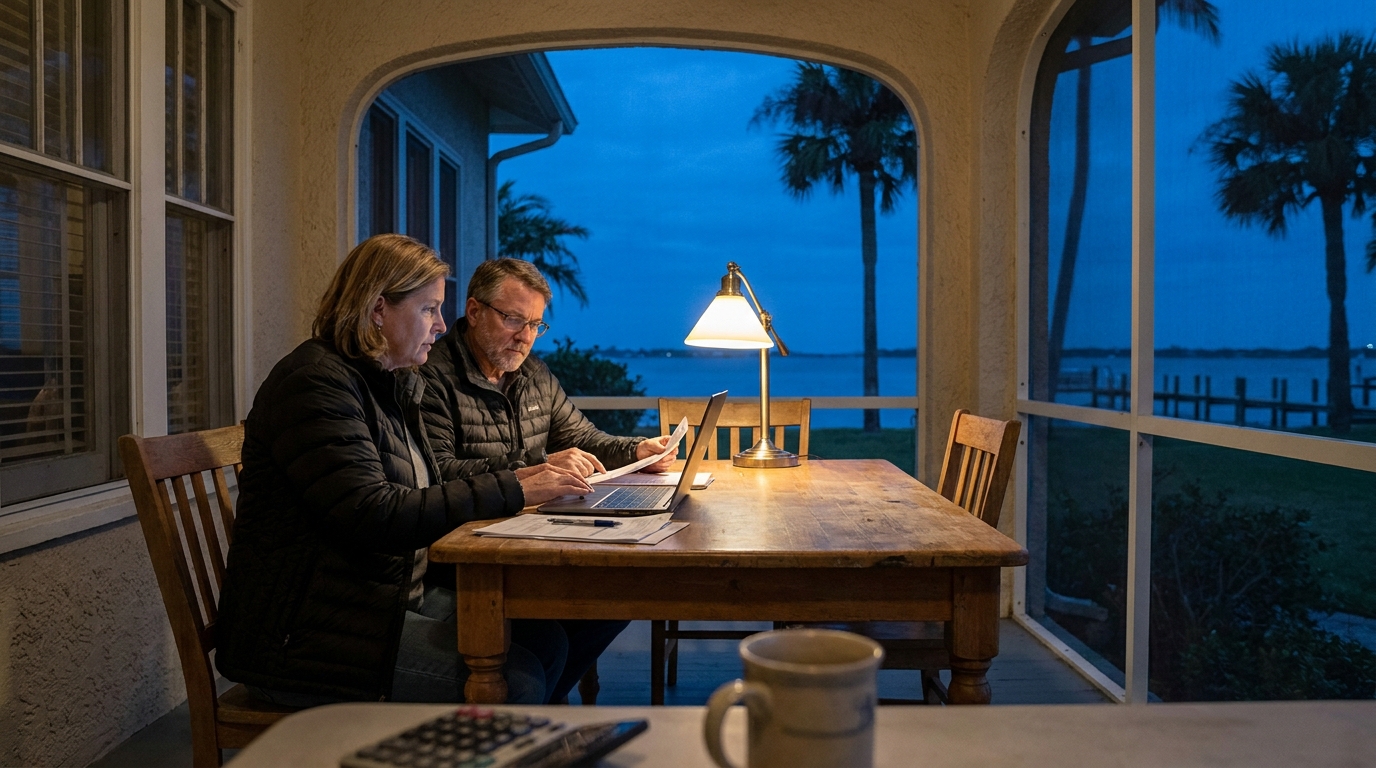
If you own a home in St. Petersburg and you've been watching mortgage rates like a hawk, you're not alone. The question isn't really "can I refinance?" — for most homeowners, the answer is yes. The real question is whether refinancing actually saves you money once you account for closing costs, how long you'll stay in the home, and what's happening in the local market.
Let's walk through a straightforward framework for deciding, using numbers that reflect what St. Pete homeowners are actually seeing in 2026.
The Short Answer: Refinancing Makes Sense When Your Break-Even Is Shorter Than Your Timeline
Here's the core math. Refinancing costs money upfront — closing costs typically run 2% to 6% of the loan amount, though a local broker example for a typical St. Petersburg transaction came in around $7,000, or roughly 1.5% of the loan. You need to stay in the home long enough for the monthly savings to outrun those upfront costs.
That crossover point is your break-even. If you're planning to sell or move before you hit it, refinancing is a net loss. If you're staying well past it, the savings compound month after month.
A Real St. Petersburg Example
Say you have about $350,000 left on your mortgage at 7.0%, and you can refinance to 6.25%. That's roughly $219 in monthly savings. If your closing costs land around $7,000, your break-even is about 32 months — just under three years.
Stay in that home five, seven, ten more years? You come out well ahead. Planning to move to a bigger place in two years because the kids are outgrowing the bungalow? Probably not worth it.
What St. Petersburg Homeowners Should Know About the Local Market
, even as rates climbed. That tells you something important: people aren't just chasing rock-bottom rates. They're refinancing to pull cash out, eliminate PMI, shorten terms, or restructure debt.
Home Values and Equity
The median home value in St. Petersburg sits around $465,000., though that number varies wildly by neighborhood — a bungalow near Old Northeast or Historic Kenwood has a different trajectory than a condo closer to the beaches.
One local wrinkle:, according to Cotality (formerly CoreLogic). That's a statewide figure, but it matters here because falling equity can push borrowers into higher loan-to-value tiers where rates worsen and mortgage insurance kicks back in.
Loan Limits That Affect Your Options
For 2026, Pinellas County's conforming loan limit is $832,750 and the FHA limit is $541,287. That covers most St. Petersburg homes, meaning most refinance borrowers here qualify for conventional or FHA pricing rather than more expensive jumbo loans. If you're near the top end of the market, though, that limit is where pricing gets sharper.
The Refinance Options Worth Knowing
Rate-and-Term Refinance
The classic move: swap your current mortgage for a new one with a lower rate, a shorter term, or both. Best fit for homeowners with 30+ months in the home ahead of them and a rate drop of at least 0.5%–0.75%.
Cash-Out Refinance
You borrow more than you owe and pocket the difference. St. Pete homeowners often use this for renovations — especially wind-mitigation upgrades, new impact windows, or roof replacements that also lower homeowners insurance premiums. Given the insurance cost pressure in coastal Florida, a cash-out refi that funds resilience upgrades can pay off twice.
FHA Streamline Refinance
If you already have an FHA loan, streamline refis skip the appraisal and income verification. You do need at least six on-time payments, and the new loan carries FHA's 1.75% upfront mortgage insurance premium plus a 0.55% annual MIP. Worth running the numbers on if rates have dropped meaningfully since you originated.
PMI Elimination Refinance
If your home has appreciated enough that you now have 20%+ equity, refinancing out of PMI can save real money even if your rate barely changes. This is one of the most overlooked plays in the current market.
Hard-Money and Non-QM Refinances
For self-employed borrowers, investors, or homeowners in unusual situations (including tax-deed rescue scenarios), non-QM and hard-money options exist. Expect rates in the 10%–15%+ range and origination fees of 2%–5%, with terms typically 24–48 months and a balloon payment. These are bridges to conventional financing, not destinations.
The St. Petersburg-Specific Factors That Change the Math
A few local realities you should fold into your decision:
- Insurance costs. Hurricane, flood, and wind exposure push homeowners insurance premiums high in St. Pete, especially for homes in flood zones near the Gulf, Tampa Bay, or lower-elevation areas around Shore Acres and Coquina Key. High premiums raise your debt-to-income ratio, which can affect refinance eligibility.
- Homestead and Save Our Homes. Florida's homestead exemption and the Save Our Homes assessment cap keep your property tax bill lower than it would otherwise be. If you're considering a cash-out refi to convert your primary home into a rental, know that losing homestead status can jump your tax bill significantly.
- Down payment assistance repayment. Some Florida DPA programs (including certain 0% interest second mortgages) require repayment when you refinance, which increases your payoff amount and extends your break-even.
- Timing around hurricane season. Appraisals and insurance binders can get complicated once a named storm is in the Gulf. Homeowners often push to close refinances before June or after November to avoid delays.
Should You Use a Mortgage Broker or Go Direct to a Lender?
A direct lender offers their own products. A broker shops multiple wholesale lenders and finds the fit for your specific situation — credit profile, self-employment income, LTV, property type, and goals.
For borrowers with a straightforward W-2 profile and a plain-vanilla refinance, either path can work. For anyone with self-employment income, an investment property, a jumbo loan, or a scenario that doesn't fit the standard box, a broker typically has more paths to a workable deal because they're not limited to one lender's guidelines.
That's the model Bay to Bay Lending works from — comparing options across multiple lenders rather than steering every borrower into the same product.
Frequently Asked Questions
How much do rates need to drop to make refinancing worthwhile?
The old rule was 1%, but that's outdated. The real answer is: enough that your monthly savings pay back your closing costs before you sell or move. On a $350K loan, even a 0.75% drop can produce a workable break-even.
Are closing costs really 2%–6%?
That's the national range. In St. Petersburg, local brokers routinely come in lower — around 1.5% on a typical loan — depending on lender credits and fee structure. Always compare Loan Estimates side by side.
Can I refinance if I've lost equity?
Possibly. If your LTV is under 80%, you have room. If you're above that, you may face PMI or higher pricing. FHA and VA streamline programs are more forgiving on LTV.
What about USDA refinances?
USDA Section 502 Direct loans carry a 5.25% fixed rate as of July 1, 2026, with subsidies as low as 1% for qualifying low-income borrowers. Most of dense St. Petersburg proper doesn't qualify as rural, but some outlying areas near Pinellas County might.
The Bottom Line
Refinancing in St. Petersburg makes sense when the math works — when your break-even fits comfortably inside your timeline in the home, when your equity position is solid, and when the loan structure actually serves the goal you're trying to hit. It doesn't make sense when you're chasing a headline rate that saves you $80 a month on a loan you'll pay off in three years anyway.
Homeowners in St. Petersburg who want a straight answer on whether refinancing pencils out for their specific situation can reach Bay to Bay Lending at https://baytobaylending.com for a free break-even analysis. Bring your current statement and an idea of how long you plan to stay in the home — that's really all it takes to run the numbers honestly.