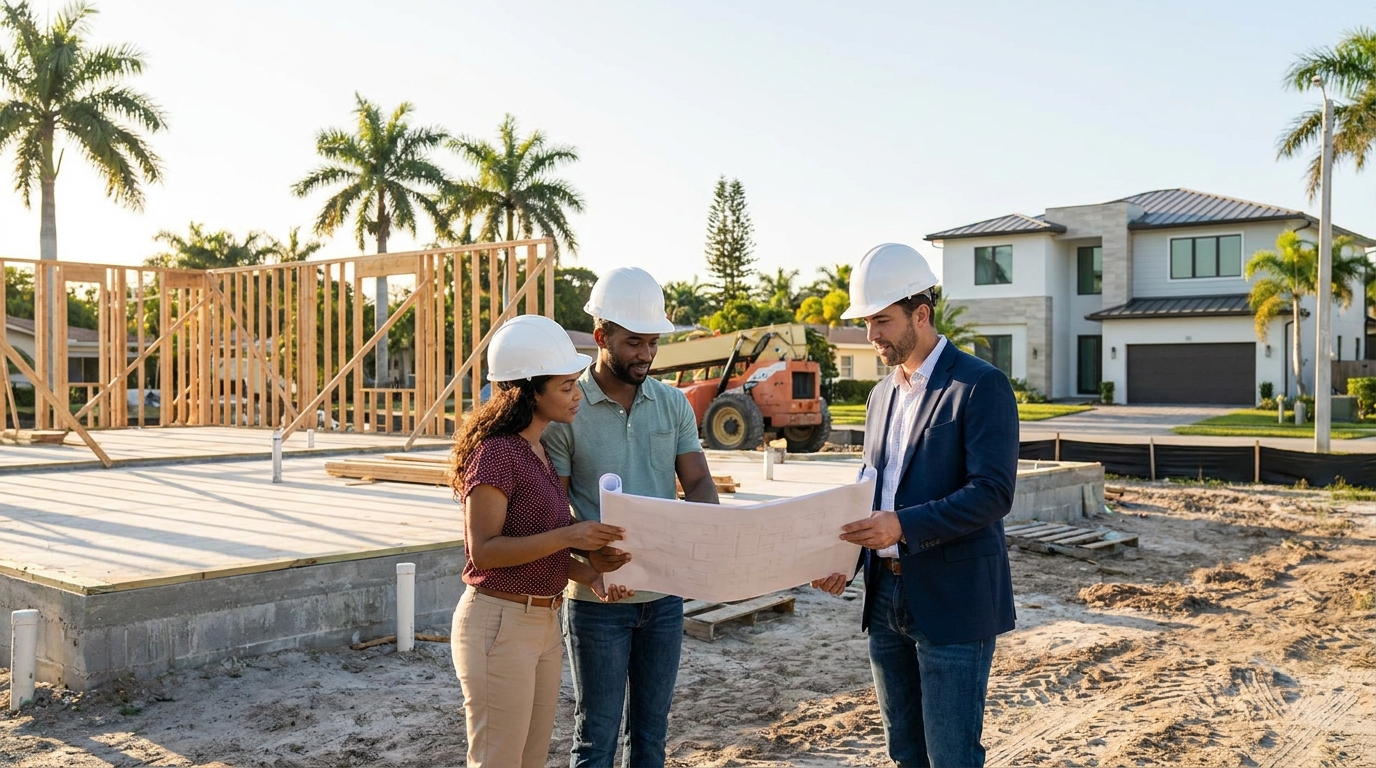
You've found the lot. Maybe it's a teardown in South Tampa where the old bungalow can't survive another hurricane season, or a vacant parcel in New Tampa where you've sketched your dream floor plan a hundred times. Now comes the harder question: how do you actually pay for building a house from scratch?
For most buyers, the answer is a construction-to-permanent loan — a single-close product that funds the build and then converts into your long-term mortgage. It's one of the more nuanced corners of home financing, and in a market like Tampa, where elevation requirements, wind-mitigation standards, and rising land values all factor into the math, getting the structure right matters more than most people realize.
What Is a Construction-to-Permanent Loan?
A construction-to-permanent loan (often called a C2P or single-close construction loan) is a financing product that covers two phases under one closing:
- The construction phase: funds are drawn in stages as your builder hits milestones — foundation, framing, dry-in, finishes.
- The permanent phase: once the certificate of occupancy is issued, the loan automatically converts into a standard 15-, 20-, or 30-year mortgage.
The defining feature is right there in the name: one closing, one set of closing costs, one underwriting process. You lock your permanent rate up front (or with a float-down option, depending on the program) and avoid the risk of requalifying later if your income, credit, or the rate environment changes mid-build.
Single-Close vs. Two-Close Construction Financing
The alternative is a two-close structure: a short-term construction loan that you refinance into a permanent mortgage when the home is finished. That used to be the standard. It still has its place — sometimes the rate math works out, especially for builders who want flexibility — but for most owner-occupants in Tampa, the single-close construction loan is the cleaner path.
Here's why the single-close approach generally wins:
- One set of closing costs. You're not paying title, origination, and recording fees twice.
- Rate certainty. You lock your permanent rate before construction begins. If rates rise during the 9–12 months your home is being built, you're protected.
- No requalification risk. If you change jobs, take on a car payment, or your credit score dips during the build, you don't have to prove yourself all over again to close the permanent loan.
- Simpler timeline. No race to refinance before the construction loan matures.
The tradeoff is that single-close products can have slightly tighter underwriting up front and fewer lenders offer them well. That's where working with a broker who actually does these regularly matters.
How the Process Works in Tampa
Building in Hillsborough County involves a few moving parts that buyers in other markets don't always have to think about. Here's the typical flow for a construction-to-permanent loan locally:
1. Pre-Approval and Budget
You'll get qualified based on the projected appraised value of the finished home, not the land plus build cost. Lenders look at your income, debt-to-income ratio, credit, and reserves. Most C2P programs in Florida want at least 10–20% down, though some specialty products go lower.
2. Builder Approval
Your builder has to be vetted by the lender. They'll review the builder's license, insurance, references, and financial standing. In Tampa, where storm-rated construction is non-negotiable, your builder also needs to be familiar with current Florida Building Code wind-load requirements — homes inside the wind-borne debris region (which covers most of the Tampa Bay area) have specific impact-glazing and structural standards.
3. Plans, Specs, and Appraisal
The appraiser values the home as if it's already built, based on plans and the cost breakdown. If you're building in flood zones — and large parts of South Tampa, Davis Islands, and the coastal areas near Westshore are in mapped flood zones — the appraisal and loan structure will account for required elevation and flood insurance.
4. One Closing
You close on the loan, the lender pays off the lot (or you bring it as equity), and construction begins.
5. Draw Schedule
The builder receives funds in installments — usually 4 to 6 draws — after inspections confirm each phase is complete. During construction, you typically pay interest only on the funds drawn, not the full loan amount.
6. Conversion to Permanent
When the home receives its certificate of occupancy from the City of Tampa or Hillsborough County, the loan converts to your long-term mortgage. No second closing, no new appraisal, no new underwriting.
Tampa-Specific Considerations
A few local factors meaningfully affect new home construction loans here:
- Hurricane and flood requirements. Construction in evacuation zones or FEMA flood zones often requires elevated foundations, hurricane straps, and impact-rated openings. These aren't optional — they're permit requirements — and they need to be in your cost breakdown from day one.
- Permit timelines. Permitting through the City of Tampa or unincorporated Hillsborough County can add weeks to your project start. Build that into your construction timeline so your interest-only period doesn't run short.
- Builder's risk insurance. Required by most lenders during construction, and in coastal Florida the premiums reflect the risk. Get quotes early.
- Land equity. If you've owned your lot for a while — common in established areas like Seminole Heights or Palma Ceia — that appreciated equity often serves as your down payment, which can reduce or eliminate cash to close.
- Seasonality. Many Tampa builders prefer to pour foundations and dry-in before the heart of hurricane season. Closing your construction loan in late winter or early spring tends to align well with that build schedule.
Who Construction-to-Permanent Loans Work Best For
This product fits a specific kind of buyer well:
- You own (or are buying) a lot and want to build a custom home rather than buy resale.
- You're tearing down an older structure — common in flood-affected neighborhoods where rebuilding to current code makes more sense than renovating.
- You want rate certainty across a long build timeline.
- You'd rather not deal with two separate closings and the requalification risk in between.
It's less ideal if you're a developer building on spec, if your build is unusually short (under 4 months), or if your builder isn't willing or able to work within a draw-schedule structure.
Frequently Asked Questions
How long does the construction phase last?
Most Tampa custom builds run 9 to 14 months from groundbreaking to certificate of occupancy, depending on size, complexity, weather delays, and permit timing. Your loan terms will define the maximum construction period.
Do I make payments during construction?
Typically yes, but only interest on the funds drawn so far. Your payment grows as more money is disbursed and stabilizes once the loan converts to permanent.
Can I lock my rate before construction starts?
Yes — that's one of the main advantages of single-close financing. Some programs also offer a one-time float-down if rates drop significantly before conversion.
What credit score do I need?
Most C2P programs want a 680 minimum, with the strongest pricing at 720+. Reserves (cash on hand after closing) matter more here than on a typical purchase loan.
Can I use a USDA, VA, or FHA construction loan?
Yes — VA and FHA both offer single-close construction options, though fewer lenders are equipped to originate them. They're worth exploring if you qualify, particularly for the lower down payment requirements.
What happens if my builder goes over budget or the project stalls?
Cost overruns are your responsibility — the loan amount is fixed at closing, so any budget increases have to be covered out of pocket or through a separate arrangement with your builder. If construction stalls significantly, the lender may intervene through the draw process. A detailed, realistic budget and a builder with a strong track record are your best protection against either scenario.
Can I make changes to the home's design after the loan closes?
Minor changes are generally manageable, but significant scope additions — structural changes, square footage increases, upgraded finishes that materially raise the cost — can complicate the draw schedule and may require lender approval. Nail down your plans and specs as completely as possible before closing. Changes mid-build cost more than changes made on paper.
Closing Thought
Construction financing rewards preparation. The buyers who have the smoothest experience are the ones who get pre-approved early, choose a builder the lender already knows, and lock in their loan structure before they're emotionally committed to a build timeline.
If you're planning a new build anywhere in the Tampa Bay area and want to talk through whether a single-close construction loan is the right fit, the team at Bay to Bay Lending (https://baytobaylending.com/) handles these regularly and can walk you through builder approval, draw schedules, and rate-lock options for your specific project. With a 4.6-star rating across 36 Google reviews and a track record of guiding buyers through complex files — one reviewer wrote that having a lender who "truly cared and wanted the best for their client was the key to getting this one closed" — they're a reasonable starting point for a conversation about your build.